Field Dispatch
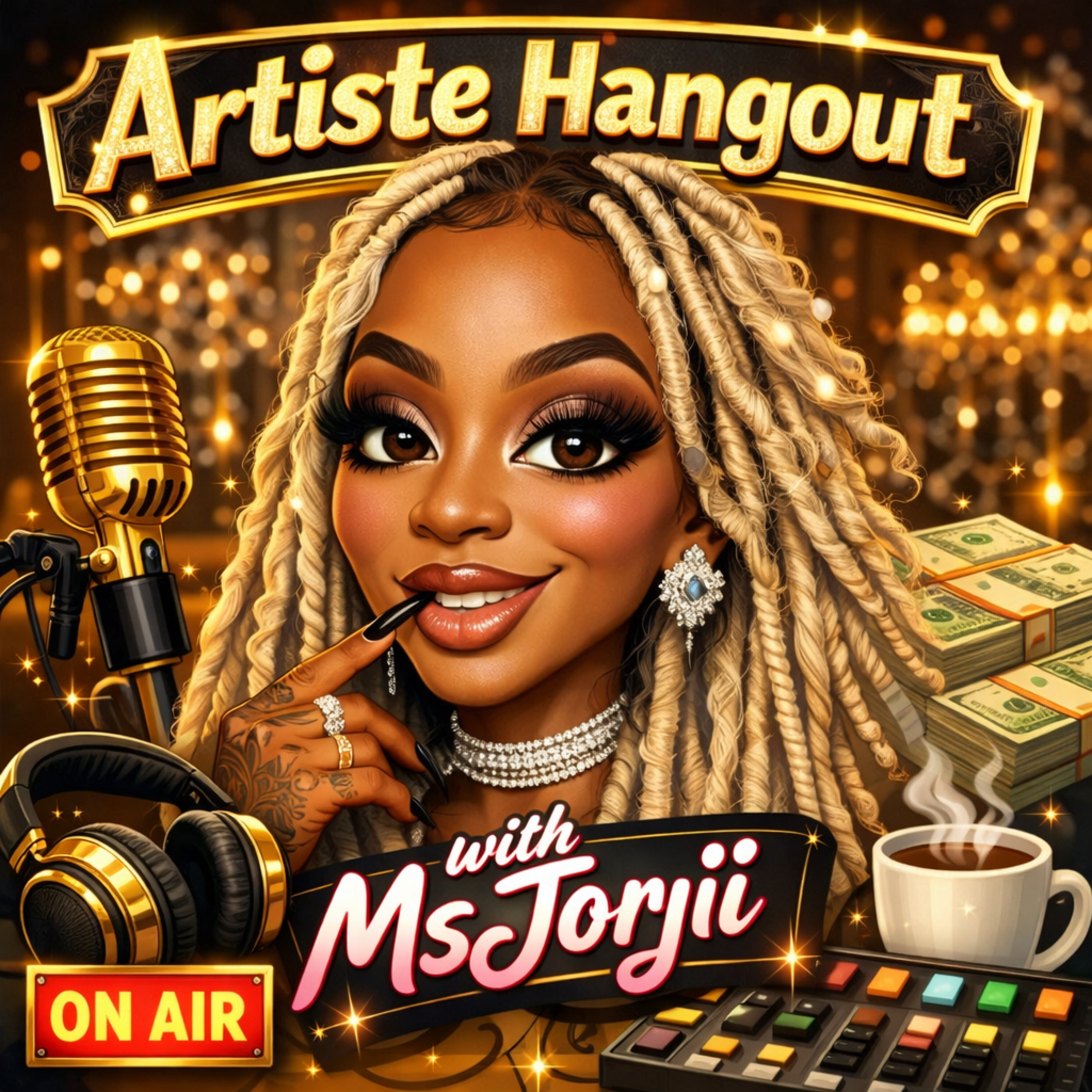
Artiste Hangout Featuring MsJorji
Briefing Notes
On this episode of Artiste Hangout, Femi Makx sits down with Ms Jorji for an open and engaging conversation about music, creativity, and building a career in today’s entertainment space.
Ms Jorji shares her journey as an artiste, the inspiration behind her sound, and the realities of finding her voice in a fast moving industry. The conversation explores confidence, creative discipline, and the importance of staying authentic while navigating growth, visibility, and public expectations.
From the creative process to personal development, this episode offers insight into what it takes to evolve as an artiste and remain intentional about your craft. It is a grounded conversation that speaks to musicians, creatives, and listeners interested in the stories behind the art.
Artiste Hangout is a podcast that highlights emerging talents and unpacks culture, creativity, and the journeys shaping today’s music scene.
Welcome to the artist hangout with Fermi Max, the space where all filtered stories from emerging musicians, producers and creators come alive. Here it's raw, it's real, and it's all about the journey. Now let's hang out do.
You do you still understand pitching like very well? I did chop. I'm small. Small. So who do you speak pigeon with there? Or it's just English? I just honestly nobody. I'd just be chopping it by myself. How come you're still in touch with your real roots like this? I think I've always at an early age, I've always known that being Nigerian was cool. Like when I was in high school, people would make fun of me here in America. Be like your African booty scratcher. And to me, every time people make fun of me, I feel like they make fun of me because they're jealous of who I am.
That's how my brain works. So I like wanted to be African more. The more I got made fun of, I was like, oh, I got to be African. I love it. So I made a point to make sure I still spoke Igbo. I watched African movies. I listened to only Afrobeats growing up. I I listened to some hip hop of course, but like HAP, Afrobeats was predominantly more my Forte and you know, I just that was it. So would you attribute all of this to your upbringing or you'd say you just you just imbibed all of this by yourself?
Myself, because my parents hate the fact that I speak, you know, a parent. My parents hate the fact that I speak pigeon or evil, that they were really trying so hard to get us to assimilate, you know, into America fully. Like my sisters don't speak Evo. They can hear it, but they don't speak. So how you, how, how are you able to do this? Like maintain the culture, maintain your personality, maintain your origin till now? How, how, how were you able to do it? What's the secret? Autism, autism. I was autistic.
I'm an autistic kid. I'm an autistic person, so I think that played a big role in my individuality and I think that's one of the things that makes me special. OK, so to to someone who doesn't know who Miss Georgie is, who is Miss Georgie? Miss Georgie is crazy. I will first say that I I love that term crazy. Miss Georgie is a bad woman, Miss Georgie is brilliant. Miss Georgie is confident. Miss Georgie does not play BS games, Miss Georgie isn't humble, Miss Georgie doesn't tolerate disrespect, and Miss Georgie stands for a Better tomorrow.
Miss Georgie into the person she is today, into this bad woman, this brilliant, intelligent lady that she is today, What formed all of this? Society, my environment and my upbringing. And I would also say my need for knowledge. I'm someone who thirsts for knowledge that really built everything of who I am. I grew up, you know, I went to college. I have three engineering degrees, but I'm someone who reads a lot. I, I, there was a time where I used to read a, a book a month. You know, that was my hobby.
He was reading because I wanted to before I became who I am now, I've always known that I was going to be very, very successful in life. And I studied other successful people to see how they've managed success and, you know, cultivated who I am around that. And also being Nigerian, growing up in religion, I hated religion. So my hate for religion and for the conservative community and the imposter and fakeness of the conservative community also, you know, built my my thirst for spirituality, knowledge and self actualization and self-awareness.
So All in all, that's what built my identity. So beyond music, you you have other businesses that you do. Well, yes, beyond music, before I became an artist, I was a software engineer. I was an engineer and yeah, and now I'm still going to go back to tech. Music is just a starting point for me. My end goal is to be a philanthropist. That's actually my my real end goal is to be a philanthropist. I have a bucket list of things I want to do, and music is just a starting point for me. I need to succeed in it and then take the money I make from there to reinvest in myself and my dreams and expand from there.
So so how long have you been into music now? I say I've been really into music since 2024, but I started doing music in 2001. Not really starting. It was more of like something that I did. I made my first song in 2001. I'm not 2001. I'm sorry. Yeah, 2021. In 20/21, I made my first song. It was a joke and I never take it seriously. I was just kind of like, you know, like, whatever. And in 2024, I finally was like, you know what, I'm really good at this. Everyone around me was like, Georgie, and, you know, you're really good at this.
And then I lost my job. And it seemed like the universe was just like, she was just shoving me down rap. Like everything was just like music. And I was like, you know what, I'm going to take the risk. I I hated corporate. I hated the mundane life. I hated the simplicity, lifestyle and who I am. Music just fits me. Rapid just fix fits me. So from 2024 when you started fully to date, you know, has has it been like for you? What has it been like for you? I mean the music space. It's been a beautiful hell.
Wow. It's been a beautiful hell because I think, I think music, if you come into music, you got to, if you really want to make a success out of this, it has to be like you have to give 100% and also come into it as a business. As much as you might come into it as an artist, the creative space, you have to come into it as a business because you're going to bleed money a lot more before you start making money. But it will also force you to really like identify who you are and because that's where you're going to sell from, you know, that's where you're going to.
Is it sales? This is a sales business, right? It just happens to be that there's music attached, but you're selling a product. The product is is the music and yourself. So I would say it taught me so much about myself. It taught me so much about what I've learned in the past with corporate to who I am now as an artist. So you'd say this bad girl persona, this brilliant, this fearless Miss George you are seeing now was all carved out of the music. It was the music that brought this part of you out or you had realized even before you went into music that you are all of this.
I mean, all of this attributes that mentioned. Was it the music that brought this out, or you had realized this long before you were eventually? I've always, I've always been like this. I think if you were to ask my parents, they would tell you I've always been like the black sheep, the problem child. I've always been the one that you couldn't tell anything to, you know, and not in like I just, I've always been defined and rebellious and not because it was just to just define authority. If 1 + 1 doesn't equal 2.
And I always say autism plays a role in this is like my brain is very logical, right? 1 + 1 = 2. If 1 + 1 doesn't equal 2, I don't care what you say because 1 + 1 doesn't equal 2. So I'm very hard to manipulate, I'm very hard to sell an idea, and I judge people based on their actions, not their words. So I've always been a rebellious person and growing up African, my family and growing up Nigerian even made me more of a badass, more of a rebellion, because they're all safe, they're all fake, they're all liars.
Wow. Yeah. So you know, OK, let's let's talk about your music now. So how would you describe your music? What kind of music do you do? I am the Afro trap queen. I blend Afro beats with hip hop, the two dichotomy worlds that I come from, and I say bring them together in symbiosis to create a very eclectic, melodic, very sexy, hard sound. You know, my sound is different. I actually didn't know my sound was different. I thought I was, I, I thought I was just kind of just, you know who I am? I thought there was a bunch of me out there.
I think it just hit me last year that I'm different in a weird way, which sounds silly, but it just hit me last year that what I do is actually different, so. Your sound. What inspires your sound? Is it your experience? Could it be your probably the kind of people you look up to in music industry? What? What really inspires your sound? My sound inspired by how I grew up being an African, but in America and I'm African American. I grew up listening to Afro beats and hip hop, so my sound is really inspired from the 2 worlds I come from.
As much as I'm African, I don't play about black Americans. I think everybody knows that I'm very much, I identify as a black woman, you know, not just and I not just an African woman, I identify as an African American. So the two worlds that I've had to experience is what makes me who I am as an artist. So what record or which song came directly from a real life moment for you I. Think all of them, but if I had to really say 1, I think all of them but the one I just dropped last year. Good boy.
That was very much from of real life amazing sexual experience. It was titillating and I had to write about it. So you know, your online personal, you know, it sparked this strong reaction, admiration from some, curiosity from others. And you know, I'm in Nigeria and I know what it means to be this kind of fearless, this kind of outspoken, especially about stuffs that, you know, we grew up here in the, I mean things that were not even supposed to mention like say in the family, say in society. But you say all of these things with so much, so much.
How do that conviction? Yeah. So much confidence and the first time I just some of the song that listen to. I know we we've had all of those thoughts before. Most of most of us listening to artists sing like this, but you know, it's Cardi B and but we've never had like a pure Nigerian give us music like this. So how do you separate performance and personality and real life boundaries? I don't separate it. I think that's the thing that makes me who I am. I don't separate it because I think that's part of the reason why I hate I I'm somewhat, that's one of the parts of our culture that I hate.
I think that being grown up Nigeria, we grew up with this false narrative of what conservatism looks like. But our our culture is deplorable. Our culture, we have issues and part of that issue is that we don't have those uncomfortable conversations, right? We don't make those we don't we don't address like real things that are going on. We want to we want to put up these fake images of perfection like my guy, we did here. Like I don't understand. So I grew up like hating being Nigerian in that aspect.
And when I came into music, my goal is to destroy that infrastructure. I, I have little sisters, nieces, a lot of Gen. Z, you know, I'm, I'm late Gen. Z, millennial. A lot of people I see the net generation. I want them to be fearless. I want them to challenge the olden ways, the archaic ways of Nigeria, because that's how society grows. That's how a country grows. That's how a community grows is when the youth are able to express themselves and also to modify from what they've learned. Our my whole identity of my music is to influence, you know, especially as a woman, right?
I'm not even speaking as a man because I think the male artist, I have been doing that right, but as the female artist, right? They all sing the same bullshit. They all sing the same love story, the same sappy shit. They're always freaking depressed, always begging for love. It's always some sappy crap. And it's just like, and they're like, they never really talk about the real things that are going on in our country. They never talk about the real struggles that women are going through in our country.
Like it's always just the men who are holding themselves up, right, Which upholds the patriarchy. So for me, I make a point as a woman to represent where I give the next generation of women confidence to challenge the status quo, to be like, you know what? I know, go do this rubbish. No, I don't want to, I don't want to, you know, get married. No, I don't want to be a mother. No, I don't want to be a wife. No, I want to be a businesswoman. No, I want like I, I want to give them the confidence to know that they are more than just what their parents told them they have to be and that's how Nigeria is going to grow.
First off and let me just give you a little bit. If you were to work with any artist in Nigeria right now, you know artist that you, you feel are on the same level as you, on same mentality as you, what kind of artist would that be or what artist would that? Be I love there's this girl named Leah. She's amazing. I love Leah. I want, I definitely want to work with her. I want to work with Rod Kelly. There's quite a few artists and honestly tell the truth, I can name a lot. But truthfully, the way I work, I want to work with who wants to work with me, period.
I think if, if you want to be honest, who I am and how I'm coming in, a lot of people who I want to work with, you know, a lot of people in the industry who are big, like I am a disruptor. Not everyone is comfortable around me. Not everyone you know, knows how to handle who I am. So I've made a point to like not be like, oh, I want to work with this person is whoever wants to work with me is who I want to work with. I think the big dogs are the other people who are considered the big dogs in the industry.
They do have their proclivities when it comes to me as an artist, and but I also don't bow to them as the fact that they're the big dogs. That's one thing I respect about American Music, right? American artists, they don't bow to the big dogs. They chase to see if they can become the big dogs, right? And that's why you see how the American Music industry rotates in and out, right? They rotate in and out. New people come in all the time. Like it's, it's a cycle, right? Afrobeats doesn't do that because everyone wants to get in and, you know, lock the gates.
And I'm like, I'm an engineer. I'm going to hack through that gate. You know, I can, I'm going to get through that gate. You there's no gate that's going to keep me out. And people don't tend to like that when they think they're supposed to sit at the top forever. So I'm, I'm more of like, I want to work with people who are talented, who want to work with me and people who are ready to define the stat to defy the status quo. So how has the receiving of your music be looking at the metrics like how has it been for your music in Nigeria?
Do you think it's thriving? Do you think a lot of people are like accepting your style of music or do you think it's I mean, or is it something else? I think for me it's so weird, right? I'm not a numbers person even though I know that's what people are chasing is like streaming numbers. I think stream is always really fake. I always look to resonate to real life experience, like people who really know your music in real life. I'm more cultivated to like authenticity and for me, I people know me.
People know my music people even though like you know, people know me on social media and they know my music and I see that I see the movement on that. Yes, I'm building to have the millions of fans, right, the millions of streams, but I'm also very proud of the fact that like, I know, like I might like someone just hit me up. I was like, oh, they're playing your song on the Radio 3 days ago. I'm like, holy crap, for real. They're like, yeah, I'm like, I didn't pay for that, you know, I didn't pay for that.
And I'm like, oh wow. Like people are really listen to me when people are DM ING me, messaging me. And like I was going through a little bit of depression earlier in January when the year just started. I wasn't really feeling my, I was, I wasn't really feeling my 100% best. I was dealing with a little bit of self doubt and I was coming out of it and people were messaging me, looking for me. I lost my page on TikTok and my Instagram and I'm rebuilding and I was like, you know, how do I come back from?
I did almost 60 million impressions last year on social media. So I'm like so sad about it. I lost my page. I'm like, I got to start all over again. You know what, it's cool, whatever. You know, I'm not a give up kind of person, but it did hurt. And as soon as I came back online, I'm just like my first live. My first post is people just going, Georgie, where are you? Where have you been? Like people looking for me, like what is going on? I can't find you. Like Georgie, when is the new song coming out?
I'm like, Oh my God, these people know me.
So that really motivates me. That really motivates me. That really makes me feel good. And the girls now, especially African girls, they DM me with like Georgie, you, I really, you've really inspired me. Like I'm so more confident. Even the girls that get their hair done now, the beach, like the blonde, the Russian blonde, like I love seeing the little specks of it as how it's starting because it starts like that and then it becomes a wave. Think you were in like Nigeria last year or was it? Yes.
OK, So what was the experience like? It was fantastic. Whenever I come to Nigeria, Oh my God, I love Nigeria. Like I'm not going to even deny that. You know, I don't eat African food unless I'm in Nigeria, which is so sad, but it's the truth. So where you? Come to Nigeria, I love everything. What don't I eat is actually the real question. I'm I'm manifesting an endorsement with Mega chicken. So I'm just putting it out there. Mega Chicken is going to endorse me. Mega Chicken is going to endorse me.
But but I love everything. Peppered gizzard Turkey. Peppered Turkey okra soup. Like what? Gela fries? Like what don't I eat? What Suya? What do you? Mean. Like, come on now, I can't come out of Haiti. Come on now. I dare you more. Babe. I'm a raw African girl. I know we kicking feet. People be laughing at me because I love chicken feet, though I am a Bush girl, I love my chicken feet.
Let's let's talk about the Nigerian music industry right now. Do you think we are where we are supposed to be or do you think there's more that can be done to you know, Bronner boy is doing great whiskey Davido see why Ira star Raymond rest. But do you think there's more we can achieve or you think we're already at that sport? No, I think we're actually regressing. I think Afrobeats is regressing. I think Nigerian music is slowly regressing. One, everybody's trying to be American. Everybody's trying to chase the American market, the Western market, which is cool, don't get me wrong.
There's market there, right? But I think we're losing the plot. I think Afrobeats is losing the plot and that's why like it's crazy because people are always telling me why are you trying to get into the Nigerian market? You should focus in America. You're in America and I'm like, no, Nigeria is the powerhouse in music, Our fro beats is the powerhouse in music. It's different, don't get me wrong. The Americans just have the infrastructure when Nigeria has talent, I've seen it. I, I see the raw talent in it.
But the people that are the big dogs, I, I give credit to the men, right? The men are great at uplifting themselves, making ways for the new people, you know, like the men do a good job. The women, on the other hand, are fake as hell. They're they, they just love what I love about the Afrobeats. You know, women I made a post about, I said I love how they're so, you know, comfortably fake. They'll go through the interviews and talk about women empowerment and how hard it is to be a female in the industry and how hard it is for women to uprise in the in the industry.
And then they come out of the interview and they just forget about everything they talked about. And I always wonder, like, why are you guys not putting an effort, you know, into making a way for other girls to make it out of your country? And they keep. And the thing about it is women are too much in competition with other women men. They look at it as a way to up like upgrade themselves, right? How they can also have like different points, like a second now Alami, they bringing up a sake that's like to him.
It's like now here's another reach into the industry to ashake women are just such petty, jealous people because you cannot tell me that these people who were up there and and then if this is the truth, right? If you guys are all so big and famous and so successful and rich and you can't pull up other people, then are you successful? If you can't pull up other people within your demographic, then you're not successful. You're you're fake. You're telling me that the Afro beats women. They can't even come together and throw a concert in Nigeria.
Do do a competition show in Nigeria and give out maybe $10,000 to invest in the next female artist in Africa. Like, like they haven't done anything, anything. So and every time, you know, I bring this up, people are like, Oh no, Georgie, they're trying. How are they trying? How is it the men are doing it and the women can't? What is this so special that the men are doing? What's so special that the men are doing? But the women, the only time that you see them interact is when the girl is maybe already higher up.
They'll be chasing, they'll be chasing to interact with only the ones that are already in their in their portion. And it's like, damn, like you guys are like for me, I've always said this, women are the problem in the industry. The female artists are the problem, especially the big dogs. They are the problem and the reason why Afro beats females are not establishing or not building there. And there's money to be made. There's money to be made, but they're all jealous and scared of helping the next person because they feel like they're going to miss out on money, not knowing they're going to grow their pockets doing that.
But Georgie's going to change that. Georgie's going to change that. So it's come. It's here already, in fact. We will be waiting. What are you working on currently? Any projects? Anything? Yes, this year is a big music year. 2026 is a big music year for me. It's a year of I don't even have just one thing I'm working on. Like I'm dropping a new single February 18th called Yanga. And this is like I'm giving Ebo Baguio fun club vibe, fun, upbeat. You know, it's just, it's a, it's a moment. It's just a moment.
I can't even really describe it to a tee. I just, you have to feel it. But I'm trying my best this year because my main thing I'm aiming for this year is a hit single. You know, I've done OK with my songs, but now I need to break out hit single. So that is what this year is for me. I want to see that one that really catches attention, that one that really holds my audience and expands me because will I break out this year? I'm breaking out this year. This is my breakout year. This is the year where I put my name and tell people you know me, but now you have to know me.
So as we bind down, I'd like to ask you, OK, to any girl listening to you right now, probably some girl in Lagos, open states or someone who might probably want to be as confident as you, want to be as big as you, what would you say to them? Believing yourself and love yourself, that is the key to my confidence is no one tells me who I am. I tell myself who I am. I think for any girl who's listening to me who is trying to find their confidence, you also have to heal and forgive yourself of your trauma.
You have to release your trauma. You have to. When I say release your trauma is first you have to deal with it and you have to then use your trauma to propel you to your confidence. A lot of times people run away from the shadow. I call it, you know, it's called a shadow. I call it a shadow as well. The shadow side of existence, right? The things that make us uncomfortable, the things that our insecurities, our pain, our childhood pain, our family, our scars, everything, right? We run away from it and we try to just aim for just that perfect image of what we think success looks like.
But those things that you've been through are the things that are going to give you the the Genesee Quad is seasoning to your confidence. I'm confident because of all the struggles I've been through. I'm confident because of all the pain I've been through. I'm confident because the world has given me every reason to not be confident. But yet I wake up every day smiling and loving who I am. So that's what you have to do and that's how you become confident. So would you be? When would you be coming to Nigeria?
I'll be in Nigeria in May. I'm trying to stay for a month so that I can really get to like marinate and like maybe even come up and see you and shoot him studio with you. So I'm doing a lot, you know, I love Abuja. I love Abuja you've. Been to Abuja before. What do you mean Abuja? I always I say Abuja and Anugu has the best food. Lagos I hate, I hate to say it but Lagos doesn't have good food. Abuja and Anugu has the best. Food. Thank you, thank you, thank you, thank you so much. You've been hanging out with Femi Max on the artist Hangout, Authentic voices, raw journeys, and the music behind the story.
Don't just listen. Stay connected. Subscribe on Spotify, Apple Podcasts, Amazon Music or wherever you get your podcasts.
 Apple Podcasts
 Castbox
 Castro
 Goodpods
 Moon FM
 Overcast
 Pocket Casts
 Podbean
 Podcast Addict
 Podcast Republic
 Spotify